Une question issue du sujet Centres Étrangers 10 Juin 2026 - Exercice 1
10 min
20
Indiquer si l'affirmation suivante est vraie ou fausse.
Justifier la réponse. Une réponse non justifiée ne rapporte aucun point.
Question 1
On considère les fonctions et définies sur par et .
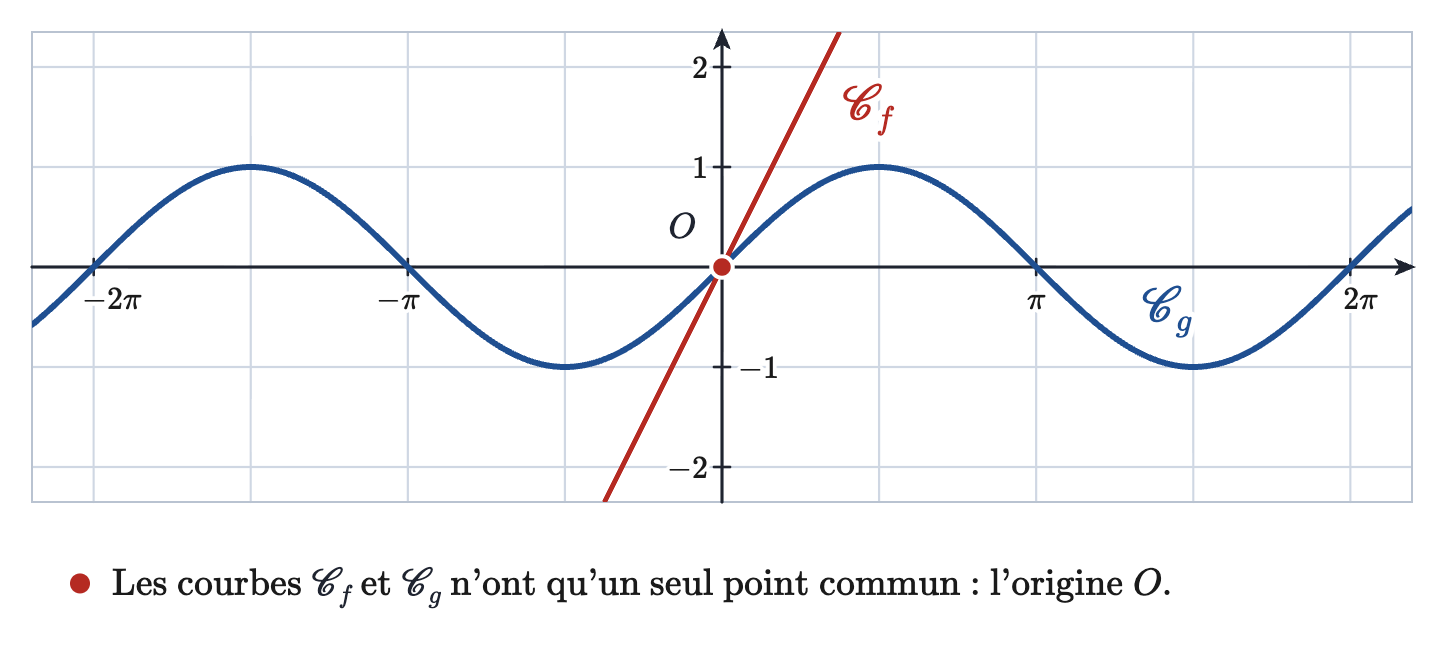
On note la courbe représentative de la fonction dans un repère et celle de la fonction .
Affirmation : Les courbes et ont un seul point d'intersection.
On note la courbe représentative de la fonction dans un repère et celle de la fonction .
Affirmation : Les courbes et ont un seul point d'intersection.
Correction
Les abscisses des points d'intersection de et sont les solutions de l'équation , c'est-à-dire .
On considère la fonction définie sur par .
La fonction est dérivable sur et pour tout réel : .
Pour tout réel : , donc .
La fonction est donc strictement croissante sur .
.
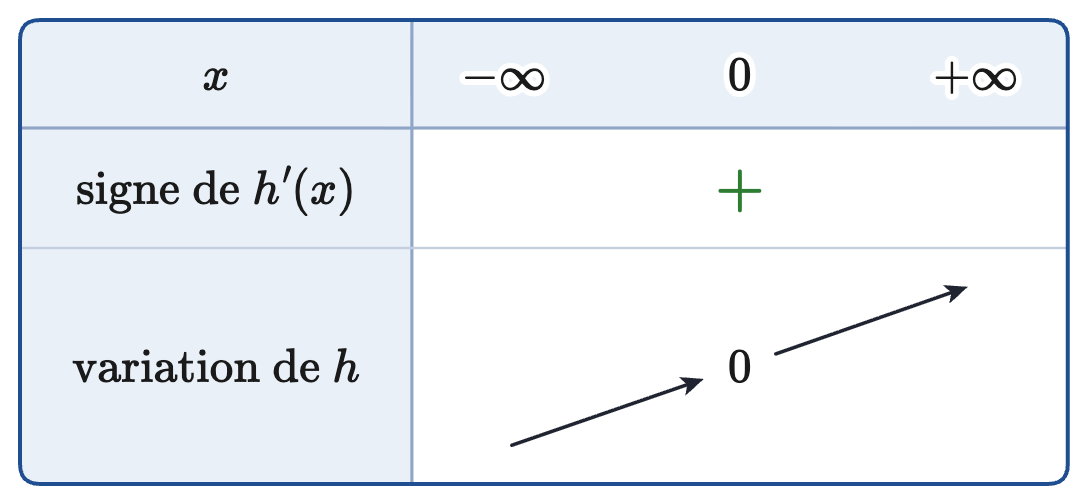 Comme est strictement croissante sur :
pour : ; pour : . L'équation admet donc une unique solution : .
Comme , les courbes et ont un seul point d'intersection : l'origine du repère.
On considère la fonction définie sur par .
La fonction est dérivable sur et pour tout réel : .
- Pour tout réel : .
La fonction est donc strictement croissante sur .
.
Comme , les courbes et ont un seul point d'intersection : l'origine du repère.
L'affirmation est vraie : les courbes et ont un seul point d'intersection.
Signaler une erreur
Aide-nous à améliorer nos contenus en signalant les erreurs ou problèmes que tu penses avoir trouvés.